Chengdu House Prices 2026: Per sqm Guide by District for Local & Foreign Buyers
Chengdu apartment prices range from ¥12.1k/sqm to ¥16.3k/sqm in 2026. A standard 70-100 sqm home costs roughly ¥847k to ¥1.63M before taxes, agent fees, renovation, and financing costs.
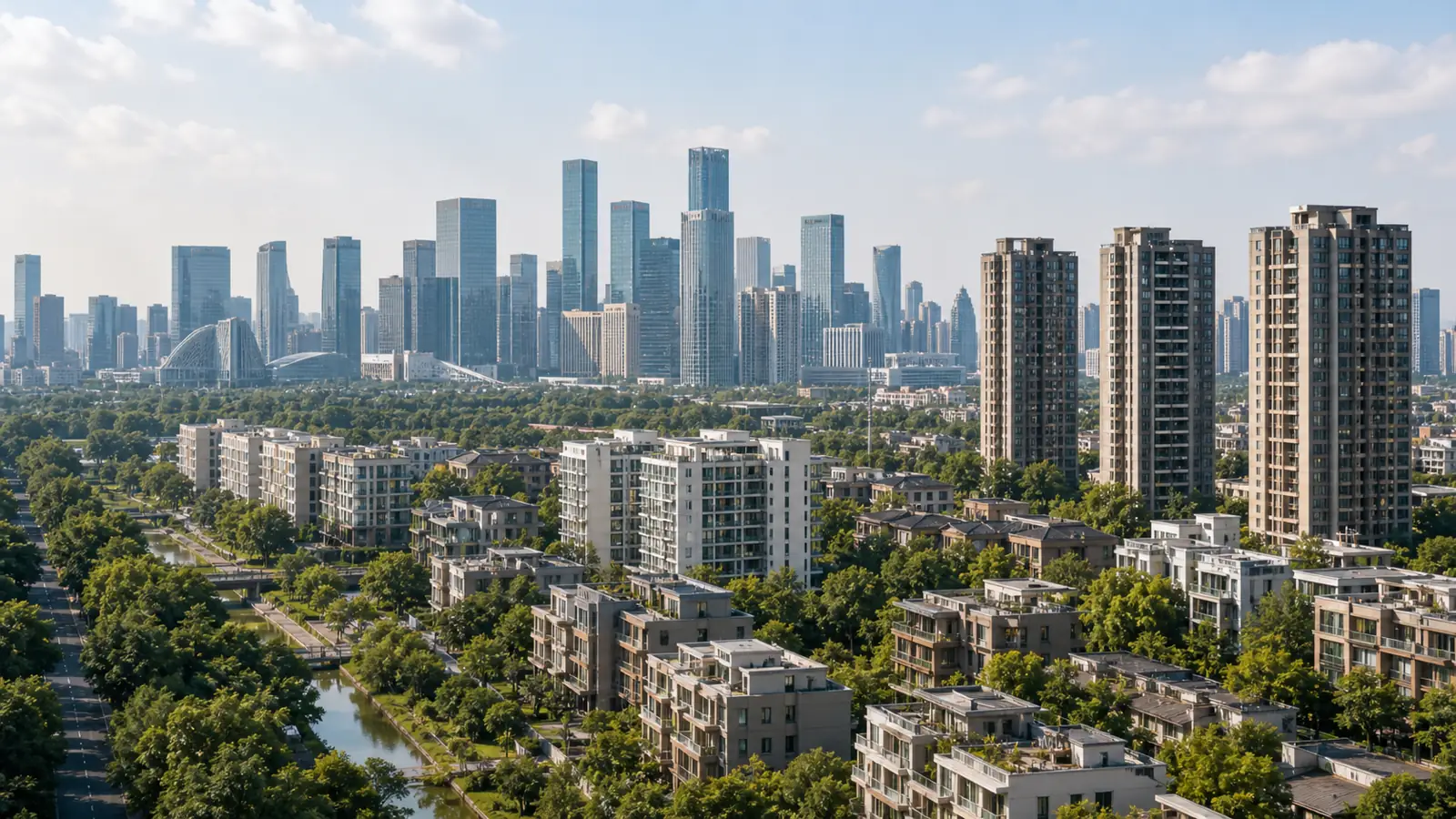
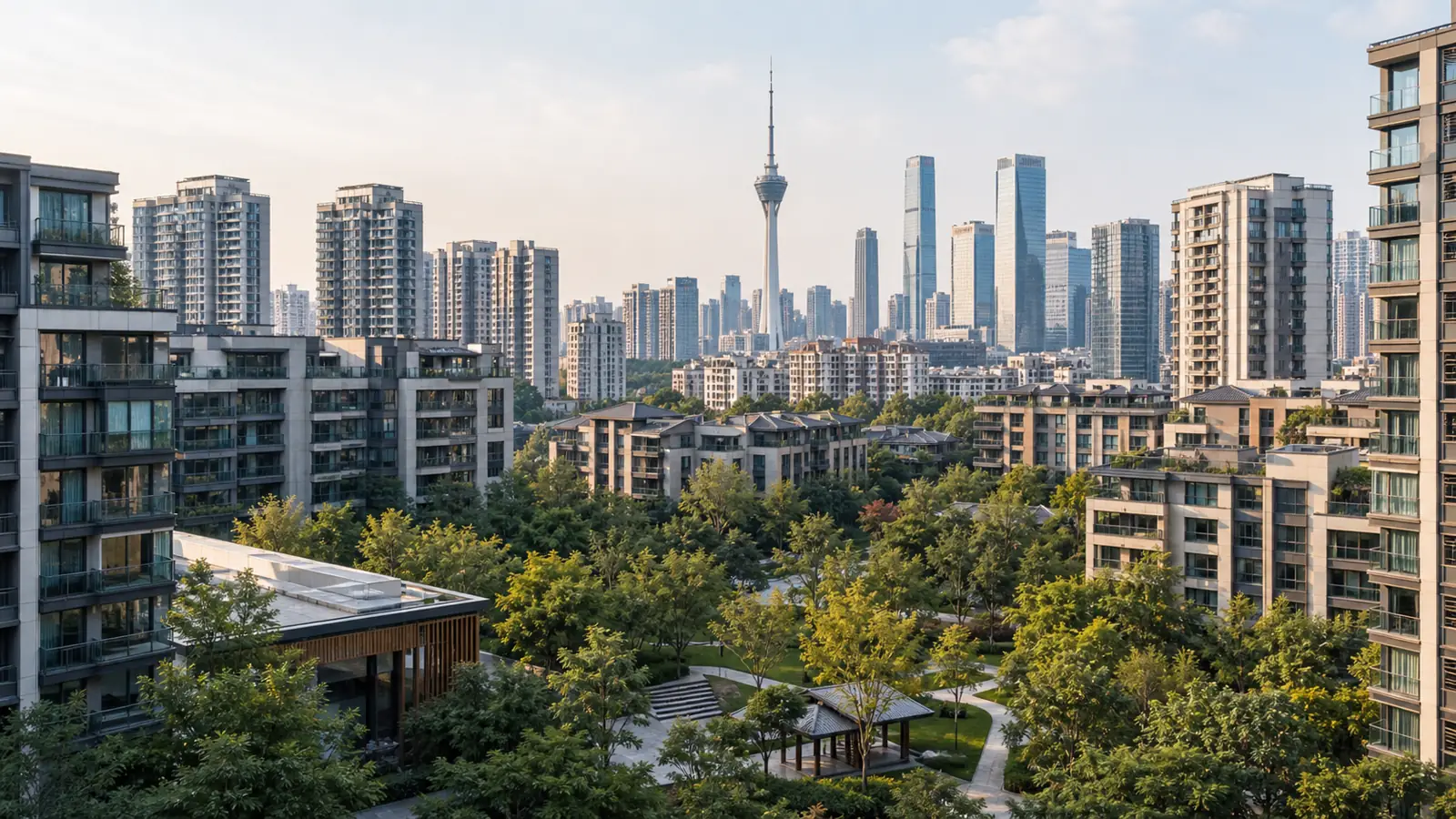
Chengdu Price Overview
High quality-of-life appeal and accessible budgets. These figures are broad second-hand residential references, not live transaction prices. In practice, floor level, subway distance, school catchment, building age, property management, and negotiation timing can move an individual unit above or below the range.
Data consistency note: this page uses the same city-level reference range as the main China house price directory and the related-city cards below. District rows are submarket examples inside that city context, not separate city averages.
To turn this Chengdu per-sqm range into a realistic acquisition budget, use the China house price calculator with Chengdu selected, then add closing costs from the China property taxes and fees guide. Buyers still comparing locations can also use the budget-to-size calculator to see whether the same budget buys more usable space in a similar city.
Chengdu House Prices by District Type
| District type | CNY per sqm | 70-100 sqm total | Buyer note |
|---|---|---|---|
| Prime core districts | ¥9,922-¥16.3k/sqm | ¥694.54k-¥1.63M | Prime core districts in Chengdu: Highest liquidity, stronger school or employment premiums. |
| Established central districts | ¥8,228-¥14.34k/sqm | ¥575.96k-¥1.43M | Established central districts in Chengdu: Useful benchmark for mainstream second-hand apartments. |
| Transit-linked urban areas | ¥6,776-¥12.22k/sqm | ¥474.32k-¥1.22M | Transit-linked urban areas in Chengdu: Often balances commute convenience with lower entry price. |
| New development zones | ¥5,808-¥11.08k/sqm | ¥406.56k-¥1.11M | New development zones in Chengdu: Pricing depends heavily on delivery quality and future infrastructure. |
| Outer residential districts | ¥4,598-¥9,128/sqm | ¥321.86k-¥912.8k | Outer residential districts in Chengdu: Larger units may be available but resale liquidity can be thinner. |
The district bands above are designed for comparison rather than quotation. A buyer should shortlist compounds inside one district type, compare recent similar listings, and then test monthly affordability with the China mortgage payment calculator. If the expected holding period is short, compare the purchase against local rent using the China rent vs buy calculator before treating ownership as the default choice.
Chengdu Prime core districts apartment prices 2026
Prime core districts in Chengdu is modeled around ¥9,922-¥16.3k/sqm in this guide. Highest liquidity, stronger school or employment premiums. Buyers should compare the band against actual compound age, elevator access, school or hospital proximity, subway distance, property management, and recent resale evidence before treating the citywide ¥12.1k-¥16.3k/sqm range as a quote.
Chengdu Established central districts apartment prices 2026
Established central districts in Chengdu is modeled around ¥8,228-¥14.34k/sqm in this guide. Useful benchmark for mainstream second-hand apartments. Buyers should compare the band against actual compound age, elevator access, school or hospital proximity, subway distance, property management, and recent resale evidence before treating the citywide ¥12.1k-¥16.3k/sqm range as a quote.
Chengdu Transit-linked urban areas apartment prices 2026
Transit-linked urban areas in Chengdu is modeled around ¥6,776-¥12.22k/sqm in this guide. Often balances commute convenience with lower entry price. Buyers should compare the band against actual compound age, elevator access, school or hospital proximity, subway distance, property management, and recent resale evidence before treating the citywide ¥12.1k-¥16.3k/sqm range as a quote.
Chengdu Budget Scenarios
The table below converts Chengdu's full ¥12.1k-¥16.3k/sqm reference range into practical purchase scenarios. Each row uses the same low-to-high city reference band for internal consistency before tax, agent commission, loan costs, renovation, furniture, and moving expenses are added.
| Scenario | Estimated size | Indicative property price | Planning use |
|---|---|---|---|
| Compact starter unit | 70 sqm | ¥847k-¥1.14M | Applies the full city reference range to a compact Chengdu unit; lower-end outcomes often involve older stock, smaller layouts, or less central locations. |
| Mainstream two-bedroom | 90 sqm | ¥1.09M-¥1.47M | Applies the full city reference range to a practical comparison size for couples, small families, and foreign buyers testing ownership versus renting. |
| Family-sized apartment | 120 sqm | ¥1.45M-¥1.96M | Applies the full city reference range to a larger Chengdu home, so the low end remains consistent with the published per-sqm benchmark. |
Why Chengdu Homes Carry Premiums
Chengdu's premium comes from livability and strong central districts. Jinjiang, Wuhou, Qingyang, and high-quality compounds near business or leisure areas can price above the broad city range.
Tianfu New Area is the city's most important policy-expectation premium. Buyers are often paying for planned offices, civic facilities, schools, and long-term southward growth, so the specific compound needs evidence of daily-life demand and resale liquidity.
Metro Line 18 has created a second emerging premium along airport and south-Chengdu corridors. Homes close to practical stations can command more attention than similar projects without fast rail access, but delivery quality and surrounding commercial maturity still need checking.
Chengdu remains a value benchmark among large cities because the broad range is far below Hangzhou and Shanghai while lifestyle demand is strong. That value case is strongest in proven districts or transit-linked growth areas, not speculative fringe projects.
Foreign Buyers in Chengdu
Foreign buyers should treat Chengdu eligibility as a separate due-diligence track from price research. A typical framework is one residential property for self-residence, valid China residence documentation, and local review of tax, social security, income, and source-of-funds records. Investment purchases should not be assumed permitted.
Current restriction status: city-level rules can change and may be stricter in large or policy-sensitive markets. Confirm the latest requirements with the local housing bureau, bank, notary office, and a qualified real estate lawyer before signing a contract.
English-language support is most practical through international real estate agencies, bilingual local lawyers, bank relationship managers, and official municipal service hotlines where available. Start with the broader foreign buyer eligibility guide.
For budgeting, foreign buyers should also test higher down-payment assumptions in the mortgage calculator and check whether the selected district remains attractive after taxes and fees. A purchase that looks affordable on price alone can become weak if financing access, transfer registration, or resale liquidity is uncertain.
How to Read Chengdu Price Data
The ¥12.1k-¥16.3k per sqm Chengdu range needs a north-south growth reading. Central Jinjiang, Wuhou, Qingyang, and mature high-tech areas should be compared separately from Tianfu New Area and farther growth corridors.
Every ¥1,000 per sqm adds about ¥70k to a 70 sqm Chengdu apartment. Around Tianfu New Area, that premium may reflect policy expectations, planned schools, office clusters, and future transport rather than current street-level maturity, so buyers should check what is already delivered.
Metro Line 18 and south-Chengdu access are especially important for Chengdu. A station-linked project with real commuting value can justify a higher price, while a distant new project without proven occupancy or commercial services can look cheap but carry weaker liquidity.
Chengdu Buyer Due Diligence Checklist
Tianfu New Area delivery risk
For Tianfu New Area, separate policy narrative from delivered amenities. Check occupancy, school operation, retail maturity, metro access, and comparable resale activity before paying a premium for future growth.
Metro Line 18 and commute value
Line 18 access can matter, but station distance and transfer time decide whether the premium is practical. Compare walking time, airport or south-Chengdu commute needs, and whether the compound has enough local demand beyond speculative buyers.
Central lifestyle versus floor area
Chengdu often gives buyers a choice between central lifestyle districts and larger southern or suburban units. Test the trade-off against daily routines, schools, healthcare, rental substitutes, and how easily similar homes resell in the same community.
A practical final check is to compare Chengdu with similar cities before committing. If the same budget buys far more space in a peer city, the premium should be supported by a real need: job location, family requirements, education, healthcare, lifestyle, or stronger resale liquidity. If the goal is simply exposure to China real estate, the risk profile may be different from a self-use purchase and should be discussed with qualified advisers.
Use this checklist together with the Chengdu property cost estimate workflow, the buyer cost guide, and the foreign ownership rules overview. These contextual checks keep the city page connected to the rest of the China housing topic cluster instead of leaving the district table as an isolated data point.
Chengdu Property FAQ
How much does an apartment cost in Chengdu?
Chengdu apartment prices range from ¥12.1k to ¥16.3k per sqm as of 2026. A standard 70-100 sqm unit costs approximately ¥847k to ¥1.63M depending on district, building age, transit access, and renovation quality.
Which district in Chengdu is cheapest to buy property?
The cheapest areas in Chengdu are usually outer residential districts, older resale communities, or inventory-heavy suburban pockets. In this guide, lower-end references start around ¥12.1k per sqm, but buyers should verify commute time, title, and renovation cost.
Can foreigners buy property in Chengdu?
Foreign nationals may buy one residential property in Chengdu for self-residence if local eligibility, residence documentation, and source-of-funds review are satisfied. Rules change by city, so confirm current requirements before relying on any estimate.
What are the purchase restrictions in Chengdu?
Chengdu purchase restrictions can involve residence status, tax or social security records, one-property limits, mortgage qualification, and self-use requirements. Budget planning should include policy verification as well as the ¥12.1k-¥16.3k per sqm price range.
Is Chengdu a good place to buy property in 2026?
Chengdu can be suitable for buyers who need local use, understand district-level liquidity, and can hold through market cycles. It should not be treated as automatic investment advice; compare price, eligibility, taxes, and resale demand first.
What is the average house price per sqm in Chengdu?
The average house price per sqm in Chengdu is approximately ¥14.2k CNY in 2026, based on a broad market reference range of ¥12.1k to ¥16.3k per sqm. Prime districts can exceed this midpoint, while older or outer areas usually sit below it.
Compare Nearby and Similar Cities
Continue comparing Chengdu with nearby or similar housing markets: Beijing House Prices 2026, Shanghai House Prices 2026, Hangzhou Property Prices 2026, Chongqing Apartment Prices per sqm, Wuhan House Prices 2026, Nanjing House Prices 2026.
¥35k-¥150k/sqm | Tier 1 | Compare against Chengdu
¥52.2k-¥70.6k/sqm | Tier 1 | Compare against Chengdu
¥26.7k-¥36.1k/sqm | New Tier 1 | Compare against Chengdu
¥7,400-¥10k/sqm | New Tier 1 | Compare against Chengdu
¥9,600-¥13k/sqm | New Tier 1 | Compare against Chengdu
¥18k-¥24.3k/sqm | New Tier 1 | Compare against Chengdu
Sources & Disclaimer
Sources: This page uses broad reference ranges from public market reporting, city housing information, and major listing platforms. Official starting points include the National Bureau of Statistics National Data portal, Ministry of Housing and Urban-Rural Development, and relevant local housing bureau notices.
Last verified: 2026-05
Disclaimer: Information is for educational planning only and is not legal, tax, lending, valuation, or investment advice. Verify current listings, official policy, bank rules, taxes, and professional guidance before making any purchase decision.