Beijing House Prices 2026: Per sqm Guide by District for Local & Foreign Buyers
Beijing apartment prices range from ¥35k/sqm to ¥150k/sqm in 2026. A standard 70-100 sqm home costs roughly ¥2.45M to ¥15M before taxes, agent fees, renovation, and financing costs.
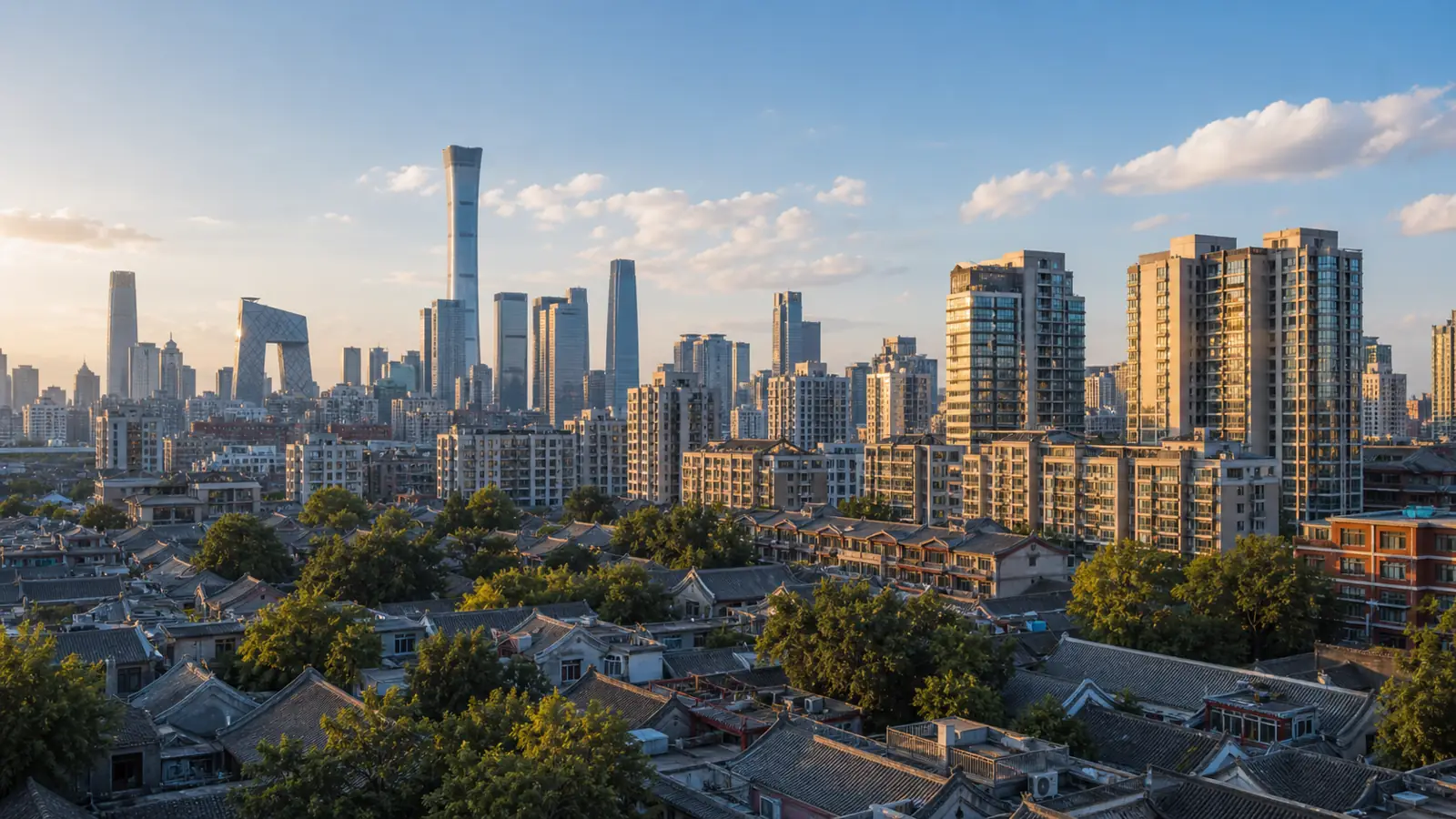
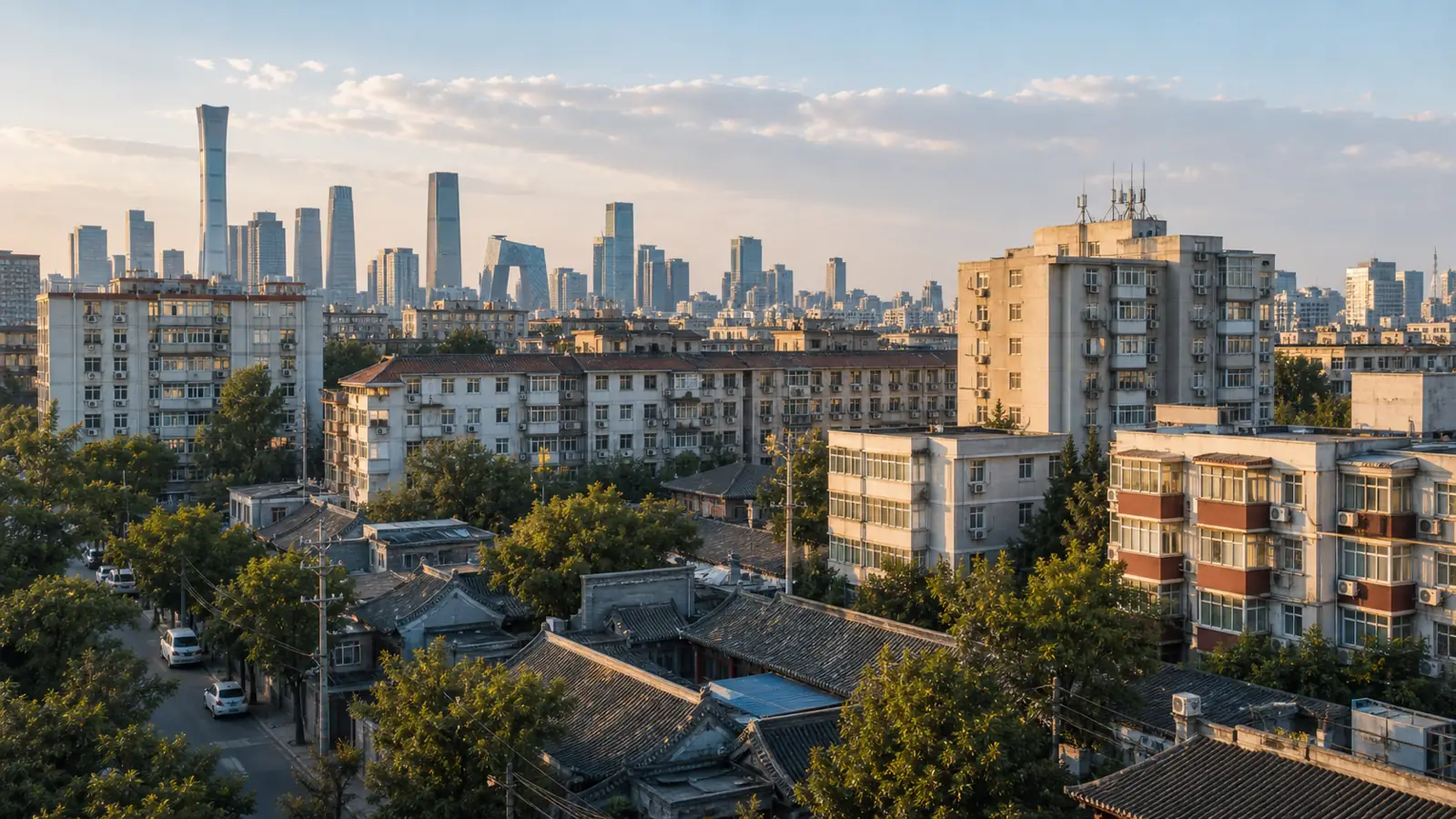
Beijing Price Overview
Capital city with strong school district and core-area premiums. These figures are broad second-hand residential references, not live transaction prices. In practice, floor level, subway distance, school catchment, building age, property management, and negotiation timing can move an individual unit above or below the range.
Data consistency note: this page uses the same city-level reference range as the main China house price directory and the related-city cards below. District rows are submarket examples inside that city context, not separate city averages.
To turn this Beijing per-sqm range into a realistic acquisition budget, use the China house price calculator with Beijing selected, then add closing costs from the China property taxes and fees guide. Buyers still comparing locations can also use the budget-to-size calculator to see whether the same budget buys more usable space in a similar city.
Beijing House Prices by District Type
| District type | CNY per sqm | 70-100 sqm total | Buyer note |
|---|---|---|---|
| Xicheng / Dongcheng school-zone cores | ¥80k-¥150k/sqm | ¥5.6M-¥15M | Xicheng and Dongcheng school-zone cores carry top school and central administrative premiums; verify enrollment rights carefully. |
| Haidian education and tech corridors | ¥65k-¥120k/sqm | ¥4.55M-¥12M | Haidian district combines university belt, tech corridor, and school-zone demand, with large compound-level price differences. |
| Chaoyang CBD and international areas | ¥60k-¥110k/sqm | ¥4.2M-¥11M | Chaoyang district combines CBD access, embassies, international services, and stronger rental alternatives for foreign buyers. |
| Fengtai and Shijingshan urban districts | ¥45k-¥80k/sqm | ¥3.15M-¥8M | Fengtai and Shijingshan offer more space for the budget while retaining urban subway access. |
| Tongzhou sub-center | ¥40k-¥70k/sqm | ¥2.8M-¥7M | Tongzhou house prices reflect policy-driven sub-center demand; commute time and future supply matter. |
| Changping subway-linked communities | ¥35k-¥60k/sqm | ¥2.45M-¥6M | Changping subway-linked communities lower the Beijing entry price but require education and commute trade-off checks. |
| Fangshan and Daxing outer areas | ¥35k-¥50k/sqm | ¥2.45M-¥5M | Fangshan and Daxing are often lower Beijing entry points; resale depth varies by subway access and compound quality. |
| Peripheral inventory pockets | ¥35k-¥40k/sqm | ¥2.45M-¥4M | Peripheral Beijing inventory pockets are most sensitive to supply, commute time, and holding period. |
The district bands above are designed for comparison rather than quotation. A buyer should shortlist compounds inside one district type, compare recent similar listings, and then test monthly affordability with the China mortgage payment calculator. If the expected holding period is short, compare the purchase against local rent using the China rent vs buy calculator before treating ownership as the default choice.
Xicheng District House Prices 2026: School Zone Premium Guide
Xicheng is one of the most expensive Beijing submarkets because buyers are often paying for scarce central location and school-zone value at the same time. In this guide, Xicheng and nearby Dongcheng school-zone cores are modeled around ¥80k-¥150k/sqm. The buyer profile is usually local families prioritizing education access, public-sector convenience, hospitals, and long-term resale liquidity rather than floor area.
The risk is that a school-zone premium is policy-sensitive. Multi-school assignment, hukou rules, enrollment history, and compound-specific eligibility can change the real value of an apartment. Buyers should compare Xicheng against Haidian and Dongcheng, then verify school rights in writing before treating a high per-sqm price as justified.
Haidian District House Prices 2026: Education and Tech Corridor
Haidian apartment prices are supported by a rare mix of universities, technology employers, research institutes, hospitals, and school demand. The Haidian education and tech corridor band is modeled around ¥65k-¥120k/sqm, but compound-level differences are large. Homes near Zhongguancun, Wudaokou, strong school catchments, and practical subway links can sit near the upper end, while older or less connected communities may trade below it.
The typical Haidian buyer wants education optionality, tech-sector commute access, and better resale depth than outer Beijing districts. Compared with Chaoyang, Haidian can feel less international but more education-driven. Compared with Xicheng, it may offer more varied housing stock and a wider spread between premium school compounds and ordinary resale apartments.
Chaoyang District House Prices 2026: CBD and International Areas
Chaoyang district property prices are shaped by Beijing's CBD, embassy areas, international schools, Sanlitun lifestyle demand, and stronger rental alternatives for foreign residents. This guide models Chaoyang CBD and international areas around ¥60k-¥110k/sqm. The strongest compounds usually combine metro access, professional management, elevator buildings, international services, and short commutes to Guomao, Liangmaqiao, or Wangjing.
Chaoyang can be more practical for foreign buyers than Xicheng or Haidian because bilingual services, international communities, and rental substitutes are deeper. The trade-off is that school-zone value is not always as policy-scarce as Xicheng or Haidian. Buyers should compare the specific compound with nearby rent levels and resale transactions, not just the district name.
Tongzhou House Prices 2026: Sub-Center Value and Commute Analysis
Tongzhou house prices in Beijing are driven by the municipal sub-center story, newer residential supply, and the promise of improved transport and public services. This guide models Tongzhou around ¥40k-¥70k/sqm, materially below prime Xicheng, Haidian, and Chaoyang. The typical buyer is more space-sensitive and willing to trade central-city scarcity for newer compounds, larger units, or a lower total purchase budget.
The main Tongzhou risk is timing. Policy support and infrastructure can lift demand, but future supply, actual commute time, school delivery, and local job depth decide whether a lower per-sqm price is truly good value. A buyer should compare Tongzhou with Changping, Daxing, and Fengtai rather than with only central Beijing.
Fengtai, Changping and Fangshan House Prices 2026: Outer District Alternatives
Fengtai, Shijingshan, Changping, Daxing, and Fangshan give Beijing buyers lower entry points than the central school and CBD districts. In this guide, Fengtai and Shijingshan sit around ¥45k-¥80k/sqm, Changping around ¥35k-¥60k/sqm, and Fangshan or Daxing outer areas around ¥35k-¥50k/sqm. These markets can work for buyers prioritizing usable space, newer layouts, or subway-linked commuting.
The due-diligence burden is different from central Beijing. Buyers should test station distance, transfer time, compound occupancy, school claims, title clarity, and resale depth. A low per-sqm price can be attractive, but if the buyer expects a short holding period, thinner liquidity can matter more than the initial discount.
Beijing Budget Scenarios
The table below converts Beijing's full ¥35k-¥150k/sqm reference range into practical purchase scenarios. Each row uses the same low-to-high city reference band for internal consistency before tax, agent commission, loan costs, renovation, furniture, and moving expenses are added.
| Scenario | Estimated size | Indicative property price | Planning use |
|---|---|---|---|
| Compact starter unit | 60 sqm | ¥2.1M-¥9M | Applies the full city reference range to a compact Beijing unit; lower-end outcomes often involve older stock, smaller layouts, or less central locations. |
| Mainstream two-bedroom | 85 sqm | ¥2.98M-¥12.75M | Applies the full city reference range to a practical comparison size for couples, small families, and foreign buyers testing ownership versus renting. |
| Family-sized apartment | 110 sqm | ¥3.85M-¥16.5M | Applies the full city reference range to a larger Beijing home, so the low end remains consistent with the published per-sqm benchmark. |
Why Beijing Homes Carry Premiums
Beijing's largest premium is school district access. Homes tied to highly regarded primary and middle schools in Dongcheng, Xicheng, and Haidian can move far above the citywide reference range, even when the building itself is older.
Administrative-center scarcity also matters. Central Beijing has limited new supply, strong public-sector employment, and deep owner demand, so well-located resale apartments often stay expensive despite broader market softness.
Subway access creates a second premium layer. Lines connecting Haidian, Chaoyang, Dongcheng, Xicheng, and Tongzhou can sharply change commute value, making station distance a practical pricing factor for both local and foreign buyers.
Foreign Buyers in Beijing
Foreigners buying property in Beijing in 2026 should treat eligibility, documents, bank review, and fund transfer as separate workstreams. Beijing is a policy-sensitive market, so a buyer should verify self-residence eligibility before paying a deposit on a home in Xicheng, Haidian, Chaoyang, Tongzhou, Changping, Daxing, or Fangshan.
Documents Foreign Buyers Usually Need in Beijing
- Passport: valid passport with matching notarized Chinese translation where required.
- China residence permit or valid visa record: proof that the buyer legally resides in China.
- Work contract or employment certificate: often used to support Beijing residence and income review.
- Tax or social security records: local compliance records may be requested for purchase qualification.
- Marriage status proof: marriage certificate, single-status statement, or spouse consent where applicable.
- Source-of-funds evidence: bank statements, salary records, remittance records, and foreign-exchange paperwork.
- Chinese name and translation consistency: the name used by the bank, notary, contract, and registration office should match.
- Mortgage pre-approval documents: income proof, credit materials, down-payment evidence, and bank valuation files if borrowing.
Typical Beijing Foreign Buyer Process
- Confirm purchase eligibility with the local housing bureau, bank, and a qualified lawyer before signing.
- Shortlist residential properties that can be transferred to a foreign buyer for self-use.
- Prepare document translations, notarization, source-of-funds evidence, and mortgage pre-approval if needed.
- Sign the purchase contract only after deposit terms, tax exposure, registration path, and foreign-exchange transfer plan are clear.
- Complete tax payment, title transfer registration, mortgage registration if applicable, and final handover checks.
The timeline can vary from several weeks to a few months depending on document translation, bank review, seller cooperation, mortgage valuation, and local registration workload. Use the foreign buyer eligibility guide, the China property taxes and fees guide, and the mortgage calculator before treating a Beijing price range as a complete purchase budget.
Beijing Property Price Trends 2026: How District and School Zone Affect Value
The ¥35k-¥150k per sqm Beijing range is not a simple city average. Beijing price reading starts with ring-road position, school catchment, subway access, and whether the compound sits in Dongcheng, Xicheng, Haidian, Chaoyang, Tongzhou, or a farther commuter district.
In Beijing, every ¥1,000 per sqm gap adds about ¥70k to a 70 sqm apartment. That sensitivity is especially visible in school-zone and non-school-zone comparisons. In parts of Xicheng or Haidian, a recognized school catchment can push a comparable unit more than 30% above a nearby apartment without the same education rights.
Beijing buyers should separate policy value from building quality. An older walk-up near a strong school or government employment node may remain liquid, while a newer peripheral unit may offer more space but weaker resale depth. The right benchmark is district-specific transaction evidence, not the citywide midpoint alone.
Beijing Buyer Due Diligence Checklist
School-zone and hukou-linked value
For Beijing, verify whether the advertised school-zone benefit actually attaches to the unit and whether recent policy changes limit enrollment rights. Do not price a Xicheng or Haidian premium as permanent without checking school allocation history, household registration constraints, and comparable transactions in the same compound.
Older compound and renovation risk
Many central Beijing bargains are older walk-ups or aging compounds. Inspect heating, plumbing, elevator status, facade maintenance, parking, noise, and whether renovation can legally change the layout. A low per-sqm price can disappear once livability and resale issues are priced in.
Purchase qualification and bank review
Beijing is policy-sensitive. Before deposit payment, confirm local purchase qualification, residence and tax record requirements, mortgage eligibility, source-of-funds review, and whether the specific residential property can be transferred to a foreign buyer for self-use.
A practical final check is to compare Beijing with similar cities before committing. If the same budget buys far more space in a peer city, the premium should be supported by a real need: job location, family requirements, education, healthcare, lifestyle, or stronger resale liquidity. If the goal is simply exposure to China real estate, the risk profile may be different from a self-use purchase and should be discussed with qualified advisers.
Use this checklist together with the Beijing property cost estimate workflow, the buyer cost guide, and the foreign ownership rules overview. These contextual checks keep the city page connected to the rest of the China housing topic cluster instead of leaving the district table as an isolated data point.
Beijing Tier-1 Market Analysis
Beijing's ¥35k-¥150k per sqm range needs to be read through policy, schools, and administrative scarcity. The city has outer districts, but the strongest resale demand is still concentrated around Xicheng, Dongcheng, Haidian, Chaoyang, and mature subway corridors where education, hospitals, employment, and government services overlap.
The Beijing premium is not only about income. It is also about access to scarce public resources. A dated apartment in a recognized school catchment can remain expensive even when a newer outer-district unit offers more space, because the buyer is paying for a bundle of school, commute, hospital, and central-city access.
Foreign buyers should be especially careful with Beijing because purchase qualification, mortgage review, and self-use interpretation can be stricter than in many other cities. Before paying a deposit, confirm the current local policy, whether the buyer status is accepted, and whether the property can be registered smoothly.
The practical comparison is prime Beijing versus mainstream Beijing, not just Beijing versus another city. A central apartment with strong school and subway characteristics may justify a premium for self-use, while a buyer without those needs may get better utility from Tongzhou, Changping, Fangshan, or a new Tier-1 city.
Beijing Property FAQ
How much does an apartment cost in Beijing?
An apartment in Beijing costs approximately ¥35k to ¥150k per sqm in 2026. A typical 70-100 sqm home costs about ¥2.45M to ¥15M before taxes and fees, with Xicheng, Dongcheng, Haidian, and Chaoyang usually above outer districts such as Changping, Daxing, and Fangshan.
Which district in Beijing is cheapest to buy property?
The cheapest districts to buy property in Beijing are usually Fangshan, Daxing, outer Changping, and peripheral inventory pockets. In this guide, Beijing's lower-end district references start around ¥35k per sqm, with Changping modeled at ¥35k-¥60k/sqm and Fangshan or Daxing around ¥35k-¥50k/sqm. Buyers should verify subway access, commute time, school claims, and resale depth before treating a low price as good value.
Can foreigners buy property in Beijing?
Foreigners can buy property in Beijing for self-residence if they satisfy local eligibility review, usually including valid China residence documentation, source-of-funds checks, and confirmation that the purchase is for one residential home rather than investment use. The price budget still follows the same Beijing reference range of ¥35k-¥150k/sqm, but foreign buyers should confirm eligibility with the housing bureau, bank, notary office, and a qualified lawyer before paying a deposit.
What are the purchase restrictions in Beijing?
Beijing purchase restrictions can include residence status, tax or social security record review, one-home limits, mortgage qualification, self-use requirements, and source-of-funds checks. These rules matter most in high-value districts such as Xicheng, Dongcheng, Haidian, and Chaoyang, where a 70-100 sqm apartment can range from about ¥2.45M to ¥15M before closing costs. Buyers should verify current policy before signing because local rules can change.
Is Beijing a good place to buy property in 2026?
Beijing can be a good place to buy property in 2026 for buyers who need long-term self-use, strong school or hospital access, central employment proximity, and deep resale liquidity in districts such as Xicheng, Haidian, Chaoyang, or Dongcheng. The main risks are high entry prices of ¥35k-¥150k/sqm, policy-sensitive school-zone premiums, strict purchase qualification, and weaker liquidity in some outer or older compounds. The best fit is a buyer with a real Beijing use case and a holding period long enough to absorb taxes, fees, and market cycles.
What is the average house price per sqm in Beijing?
The average house price per sqm in Beijing is approximately ¥92.5k CNY in 2026, based on a broad market reference range of ¥35k to ¥150k per sqm. Prime districts such as Xicheng and Haidian typically exceed this midpoint, while outer areas like Fangshan and Changping sit below it.
Compare Nearby and Similar Cities
Continue comparing Beijing with nearby or similar housing markets: Shanghai House Prices 2026, Shenzhen Property Prices per sqm, Guangzhou Apartment Prices per sqm, Chengdu House Prices by District, Hangzhou Property Prices 2026, Nanjing House Prices 2026.
¥52.2k-¥70.6k/sqm | Tier 1 | Compare against Beijing
¥30k-¥140k/sqm | Tier 1 | Compare against Beijing
¥30.4k-¥41.1k/sqm | Tier 1 | Compare against Beijing
¥12.1k-¥16.3k/sqm | New Tier 1 | Compare against Beijing
¥26.7k-¥36.1k/sqm | New Tier 1 | Compare against Beijing
¥18k-¥24.3k/sqm | New Tier 1 | Compare against Beijing
Sources & Disclaimer
Sources: This page uses broad reference ranges from public market reporting, city housing information, and major listing platforms. Official starting points include the National Bureau of Statistics National Data portal, Ministry of Housing and Urban-Rural Development, and relevant local housing bureau notices.
Last verified: 2026-05
Disclaimer: Information is for educational planning only and is not legal, tax, lending, valuation, or investment advice. Verify current listings, official policy, bank rules, taxes, and professional guidance before making any purchase decision.